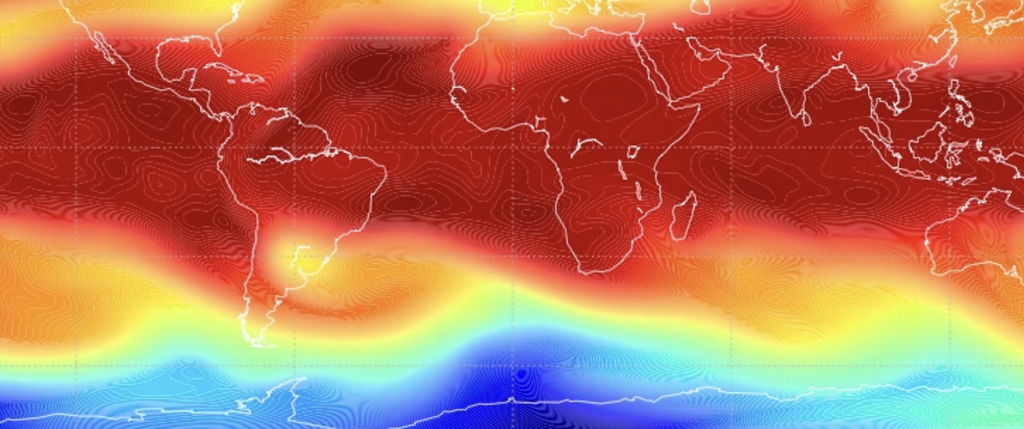
Open-source numerical libraries and simulation frameworks turn mathematical theory into practical tools for high-performance scientific computing. This section highlights open-source software packages that Daniel R. Reynolds maintains or contributes to alongside recommended scientific packages used in computational research. Contributed tools span ordinary differential equation integrators, nonlinear and differential-algebraic solver suites, astrophysical adaptive mesh refinement, Earth-system and atmosphere modeling, dislocation simulation, and Runge-Kutta exploration. Recommended packages expand this ecosystem with finite element libraries, scalable multigrid and sparse-direct solvers, and large-scale scientific toolkits. Rather than reproducing external links from the page, this overview organizes the software ecosystem and how each tool supports computational workflows.
Software Contributions and Maintained Packages
The software contributions group brings together open-source packages maintained or supported across numerical solvers, scientific simulation codes, and algorithmic exploration tools.
- ARKODE: Adaptive Runge-Kutta solvers for systems of ordinary differential equations, distributed as part of SUNDIALS.
- SUNDIALS: A suite of nonlinear differential and algebraic equation solvers supporting large-scale numerical computations.
- Enzo: An astrophysical adaptive mesh refinement simulation framework.
- E3SM/HOMME: The Energy Exascale Earth System Model component for large-scale Earth-system simulation.
- Tempest: An atmosphere and Earth-system modeling codebase.
- ParaDiS: The Parallel Dislocation Simulator for modeling dislocation dynamics.
- RKLab: A Runge-Kutta exploration framework for studying time-stepping methods.
Contributed Tools by Computational Role
Looking across the contributed packages shows how different tools address specific stages of scientific modeling and numerical integration.
| Package | Primary Focus | Ecosystem Role |
| ARKODE | Adaptive Runge-Kutta solvers for ODE systems | Distributed within the SUNDIALS solver suite |
| SUNDIALS | Nonlinear differential and algebraic equation solvers | Core numerical solver infrastructure |
| Enzo | Astrophysical adaptive mesh refinement | Domain simulation framework for astrophysics |
| E3SM/HOMME & Tempest | Earth-system and atmospheric modeling | Climate, atmosphere, and Earth-system simulation |
| ParaDiS | Parallel dislocation simulation | Materials and dislocation modeling |
| RKLab | Runge-Kutta exploration | Method experimentation and analysis framework |
Recommended Open-Source Software
Alongside contributed codebases, the page lists open-source scientific software packages used or recommended for complementary numerical and finite element tasks.
- MFEM: Modular finite element methods library for discretization and numerical simulation.
- hypre: Scalable multigrid linear solvers designed for large linear systems.
- SuperLU: Sparse-direct linear solvers for solving sparse matrix equations.
- PETSc: Portable, extensible toolkit for scientific computation.
- deal.ii: Finite element differential equations analysis library.
- FETK: Finite element toolkit for scientific computing applications.
- Trilinos: Object-oriented large-scale solver framework.
Complementary Capabilities in Recommended Libraries
The recommended packages cover finite element discretizations, linear algebra, and scalable solver toolkits that pair naturally with time integrators and multiphysics codes.
| Recommended Package | Core Category | Typical Computational Purpose |
| MFEM, deal.ii & FETK | Finite element methods | Discretizing differential equations and building finite element models |
| hypre & SuperLU | Linear solvers | Solving large linear systems via scalable multigrid or sparse-direct methods |
| PETSc & Trilinos | Large-scale toolkits & solver frameworks | Supporting extensible scientific computing and large-scale solver workflows |
Repository and Resource Indicators
Entries in the archive note where project resources are hosted or tracked, while direct links are omitted from this page.
- Code & Project Hosts: Listings reference GitHub, a GitHub account, a Bitbucket repository noted as deprecated for Enzo, Bitbucket for PETSc, an LLNL project webpage for ParaDiS, and project websites or webpages.
- Documentation & Suite Packaging: ARKODE notes distribution as part of SUNDIALS along with online documentation.
Building Reliable Scientific Computing Ecosystems
Modern scientific simulations rarely rely on a single isolated program; instead, they combine specialized solver suites, domain simulation codes, and established numerical libraries. By contributing to tools such as SUNDIALS, ARKODE, Enzo, E3SM/HOMME, Tempest, ParaDiS, and RKLab, this software portfolio supports both foundational time integration and domain-specific physical modeling. Pairing those contributions with recommended packages like MFEM, hypre, SuperLU, PETSc, deal.ii, FETK, and Trilinos highlights how modular, open-source software accelerates reproducible research. While links to external repositories, websites, and documentation are not included here, the overview maps out the software landscape presented on the page.
Frequently Asked Questions
Contributed packages include ARKODE, SUNDIALS, Enzo, E3SM/HOMME, Tempest, ParaDiS, and RKLab.
ARKODE provides adaptive Runge-Kutta solvers for ODE systems and is distributed as part of the SUNDIALS suite of nonlinear differential and algebraic solvers.
The contributed tools cover ordinary differential equations, astrophysical adaptive mesh refinement, Earth-system and atmosphere modeling, parallel dislocation simulation, and Runge-Kutta exploration.
Recommended packages include MFEM, hypre, SuperLU, PETSc, deal.ii, FETK, and Trilinos.
External links are omitted here so the page presents the archived software information without embedded links.